
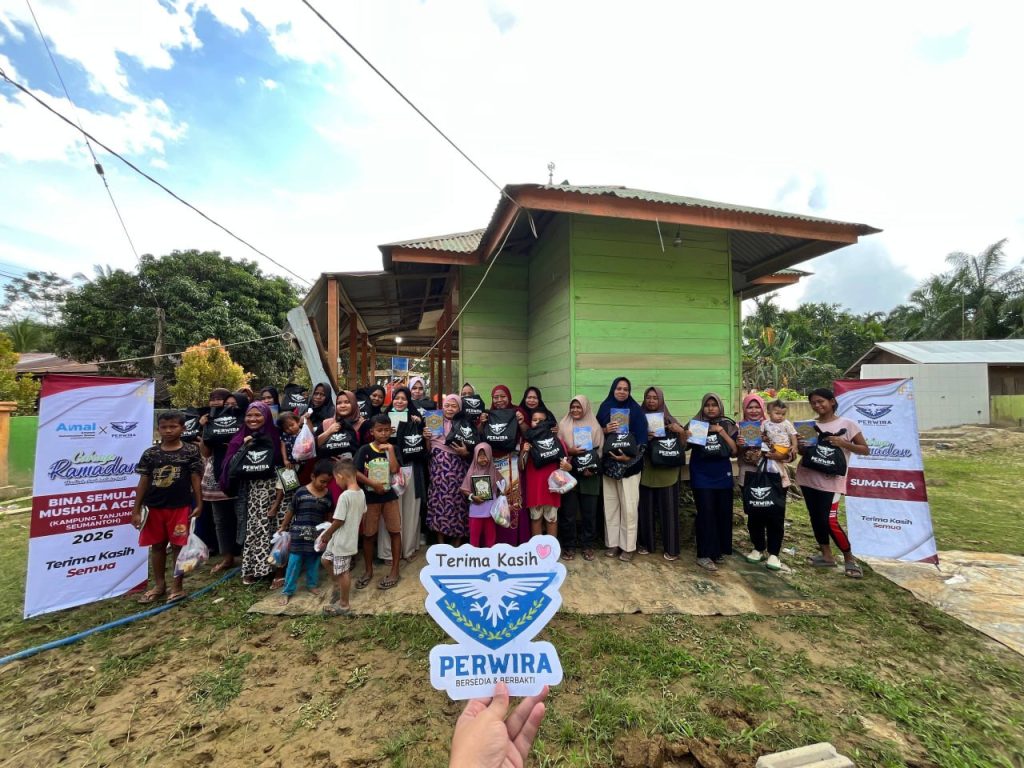
Aceh, Sumatra | January 28, 2026 Natural disasters do not only leave behind physical damage; they also create long-term challenges to the social, economic, and psychological stability of affected communities. In Aceh, a region with a long history of facing conflict and disasters, post-disaster recovery efforts remain a major test of a community's ability to rise with dignity and resilience.
In this context, Team PERWIRA is continuing its humanitarian mission in Sumatera by going out into the field to witness firsthand the reality of post-disaster life, which still significantly impacts the local residents.
The Post-Disaster Reality: Physical and Social Damage
Field surveys found that many homes and surrounding areas still suffer from damage, including fallen trees and affected basic essential property. Personal items, such as copies of the Al-Quran and clothing, were found damaged and soiled due to the disaster, reflecting a scale of destruction that goes beyond mere infrastructure.
In a post-disaster landscape, the real challenge is not just rebuilding physical structures, but restoring life routines and community confidence. Without phased and planned intervention, communities risk being trapped in a cycle of prolonged vulnerability.
Basic Infrastructure as the Core of Recovery
Among the main initiatives mobilized is the launch of the Musolla (Prayer Hall) Rebuilding Program, which functions not just as a place of worship, but as a center for community and social stability. In many post-disaster contexts, places of worship play a vital role in restoring social structures and psychosocial support.
Team PERWIRA is also monitoring the start of ank and cement installation for the Well Project, a strategic intervention to ensure access to clean water suppliesWithin a humanitarian framework, clean water is a critical prerequisite for public health, disease prevention, and small-scale economic recovery.
Education as a Long-Term Investment
Beyond infrastructure, this mission also focuses on the educational dimension through the “Back To School”, involving 100 students from Kampung Dalam Primary School. This assistance aims to ensure that the continuity of education is not interrupted even as the community faces post-disaster pressures.
In modern humanitarian analysis, education is viewed as a strategic long-term investment — not only building an individual's future but also strengthening societal resilience against future crises.
From Emergency Aid to Building Resilience
This mission reflects a shift in approach from short-term emergency aid to community-based recovery. In the geopolitical reality of Southeast Asia, which is exposed to climate disaster risks, recovery models like this are becoming increasingly relevant as a complement to the efforts of governments and international institutions.
The role of regional humanitarian teams like Team PERWIRA is becoming more significant in filling implementation gaps at the grassroots level — ensuring that recovery is not only physical in nature but also restores the dignity, social structure, and hope of the affected communities.